Research & development programme
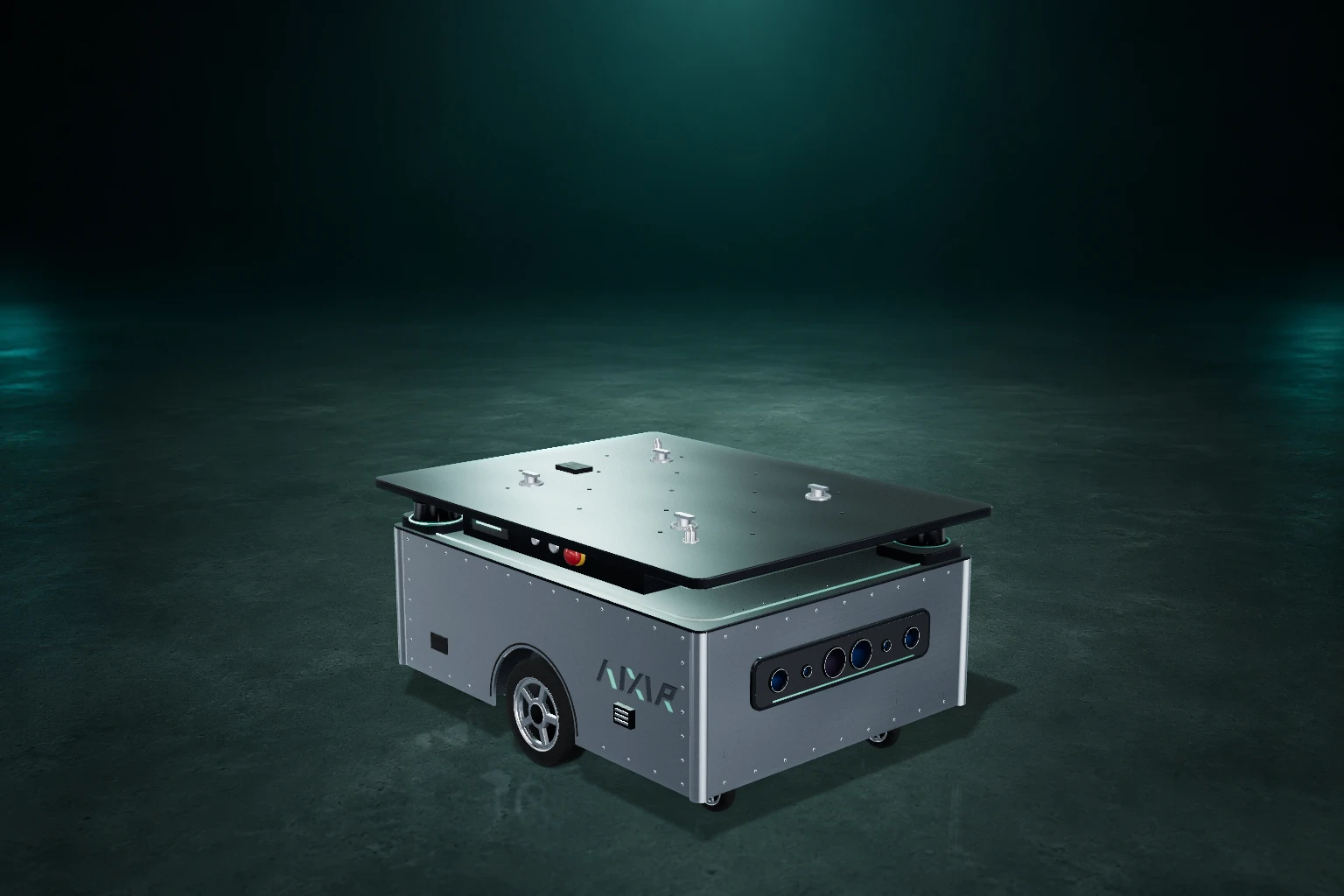
AMR-X is a modular autonomous mobile robot in research and development at CYBERMECH SYSTEMS: one base, interchangeable modules, built for the work ahead. Pre-orders only.
- Stage
- R&D · concept
- Now
- Simulation & design
- Next
- Engineering prototype
- Orders
- Pre-order only
01Platform
Built to carry what comes next.
860 × 660 mm · 50 kg · 1.5 m/s · 3 h
One serviceable platform: a common module deck above, enclosed drive, energy and control assemblies below. Scroll to take it apart.
One serviceable platform: a common module deck above, enclosed drive, energy and control assemblies below. Scroll to take it apart.
- Footprint
- 860 × 660mm
- Payload
- 50kg
- Top speed
- 1.5m/s
- Endurance
- 3h
Design targets, under validation
02Modules
Purposeful modules.
Dual Arm
Two articulated arms with five-finger hands, a stereo head and a vertical lift column. A manipulation concept for coordinated handling at conveyors and workstations.
03Module exchange
Leave a module. Collect it later.
A docking station holds the module while the base moves on to other work. Scroll to watch it undock.
UndockBase · aligning
01 / 04
Approach
The base drives into the open station with the module locked to its deck. Floor guides and the forward LiDAR bring it to the stop line.
Undock
Proposed sequence. Alignment tolerances, load sensing, interlocks and connector specifications remain to be engineered; this is not a validated automatic exchange system.
04Perception
Sees the room. Plans the way.
How a site gets mapped
01Rehearse
Each environment is built and tested in simulation first. Warehouse and hospital worlds run in Gazebo.
05Where it works
Wherever work has to move.
Coordinated handling at the conveyor.
The full-size dual-arm module explores baggage transfer at indoor handling stations.
06Patrol & security
Built to patrol.
Knows the route. Notices what changed.
Two scanners on diagonally opposite corners merge into one 360° scan. On a patrol route, a scan that no longer matches the site map can flag a blocked aisle or an object out of place. Coverage and detection performance require hardware validation.
07Live twin
Five robots. Live in your browser.
This is the fleet simulation itself, running in your browser. Drive a robot, dispatch missions, start an incident, and watch the fleet re-plan.
Two ways to reach it.
Remote
Cloud dashboard
Follow the fleet, dispatch missions and review what each robot reported from a browser, wherever your team is. Each person signs in to their own account over an encrypted connection.
On site
In-house HMI
A secure local connection on your own site, with the display and controls on the robot. Operate and diagnose it from inside the building, with no internet connection and nothing leaving the site.
Use one or both, per site. A design direction: the access and security model is still to be validated.
08Roadmap
The road ahead.
AMR-X is a research and development programme. This is the path from today’s concept to robots at work.
01
Research & simulation
Platform architecture, module concepts and the ROS 2 stack, tested in a full simulation of the fleet.
- ROS 2 · Nav2
- Dual-LiDAR perception
- Browser digital twin
02
Engineering prototype
The first physical base is built and tested against the design targets: payload, speed, endurance, stopping.
- Base hardware build
- Target validation
- Safety architecture
03
Module pilots
The first modules go to work with partners in real workflows, one environment at a time.
- Partner pilot sites
- Module interface v1
- Exchange station trials
04
Modular fleets
One base, many roles: fleets that change what they do by changing modules, run from one twin.
- Fleet operations
- Module ecosystem
- Continuous updates
Contact
Your next move starts here.
Tell us about the work and the environment. We’ll help you find the right starting point.
Any order for AMR-X at this stage is a pre-order.